Tyler Seeds
Velvet Queen Sunflower
Velvet Queen Sunflower
Couldn't load pickup availability
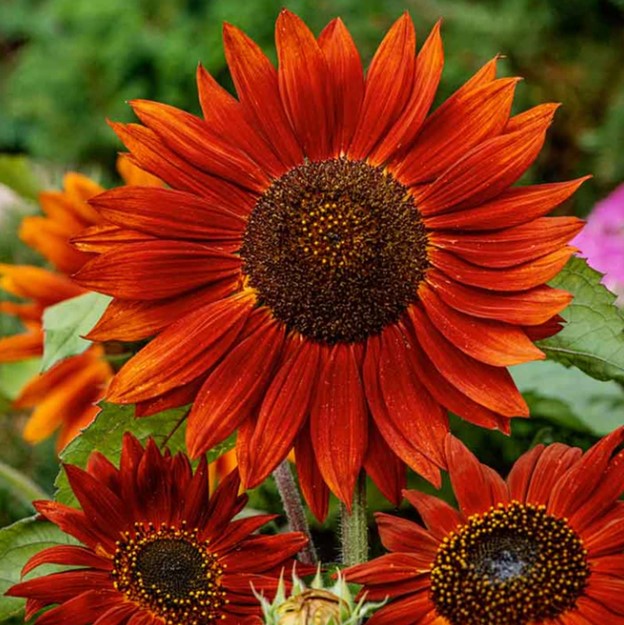
The Velvet Queen Sunflower have a striking mahogany-red blooms with a touch of gold. will freely bloom all summer long.
|
Velvet Queen |
|
|
Lifespan |
Annual |
|
Height |
5 - 7' |
|
Planting Time |
After Last Frost |
|
Sun Exposure |
Full Sun |
|
Plant Depth |
1/2 - 1" |
|
Plant Separation |
9 - 24" |
|
Days to Germination |
7 - 14 Days |
|
Days to Maturity |
70 - 100 Days |
|
Blooms |
Summer |
|
Bloom Size |
5 - 8" |
|
Flower Color |
Mahogany Red |
|
Stem |
|
|
Watering |
1 - 2" / week |
|
Growing Zones |
1 - 11 |
|
Edible Seeds |
Yes |
|
Soil Conditions |
Well drained soil with loomy condtions |
|
Fertilization |
Yes, but wait 1 month |
|
# of Seeds |
20 |
Interesting Fact: Sunflowers exhibit heliotropism, meaning they orient their flowers to follow the Sun's movement from east to west, returning at night to face the east in preparation for the morning sun. This behavior occurs during the early stages before the flower becomes heavy with seeds.
Noteworthy Information: Sunflowers thrive in slightly acidic to somewhat alkaline soil (pH 6.0 to 7.5). As heavy feeders, they require nutrient-rich soil supplemented with organic matter or composted manure. Alternatively, a slow-release granular fertilizer can be worked into the soil to a depth of 8 inches. A light application of fertilizer at planting time will promote robust root growth, safeguarding against wind damage. It is advisable to sow sunflower seeds directly into the garden or outdoor containers after the threat of spring frost has passed and when soil temperatures are at least 50°F (10°C). Once established, sunflowers should be watered deeply but infrequently to encourage deep rooting, typically once a week unless weather conditions necessitate more frequent watering. Tall species and cultivars may require support, such as bamboo stakes, which are ideal for plants with strong, single stems needing short-term support. For fungal diseases detected early, applying a general garden fungicide is recommended.
Harvesting Sunflower Seeds: Allow the flower to dry on or off the stem until the back of the head turns brown, foliage yellows, petals die down, and seeds appear plump and somewhat loose. To protect seeds intended for roasting from birds, cover the flowers with a light fabric, such as cheesecloth, secured with a rubber band. Alternatively, cut the flower head early and hang it upside down until the seeds are dry. To remove seeds, rub your hand over the seeded area or use a fork. Rinse the seeds before laying them out to dry for several hours or overnight. If saving seeds for replanting, store them in an airtight container in a cool, dry place until ready to plant.
Some Wisdom:
In certain cultures, sunflowers symbolize courage.
Sunflowers seeds can be turned into butter which makes a great alternative to peanut butter
To create a bird feeder, save whole, dry sunflower heads and set them out in winter; birds will enjoy picking at the seeds.
The tallest sunflower on record was grown in Germany in 2014, reaching an impressive height of 30 feet and 1 inch.
Roasting Sunflower Seeds: Re-soak seeds overnight in salted water, then run them through a strainer and dry them on a layer of paper towels. Bake for 25 to 30 minutes at 325 degrees Fahrenheit on a baking sheet, ensuring the seeds are spread out in a single layer. Stir frequently during baking and remove the seeds when they are slightly browned, taking care not to burn them. Optionally, add olive oil, salt, and spices to the roasted seeds if desired.
Health Note: Sunflower seeds are highly nutritious, providing a rich source of vitamin E, magnesium, and healthy fats that support overall wellness. They offer significant health benefits, including reduced inflammation, improved heart health, blood sugar regulation, immune system support, and skin health enhancement.